The world of SEO is undergoing its most profound transformation in decades. If your current SEO strategy still relies solely on traditional content creation and basic link building, you’re likely to find yourself falling behind in the coming months.
We are at the dawn of a new era, one fundamentally reshaped by the rapid ascent of Generative AI. This isn’t just a minor update; it’s a complete paradigm shift that demands a re-evaluation of every aspect of your online presence.
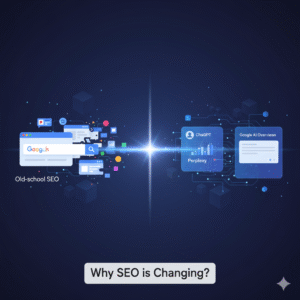
For years, SEO was synonymous with Google. Businesses optimized their websites with one goal: to rank highly in Google’s search results. While Google remains a dominant force, the landscape has diversified significantly. Today, genuine search competition has emerged from powerful AI tools like ChatGPT and Perplexity, and even Google itself is integrating AI directly into its search experience with features like AI Overviews.
This seismic shift necessitates a dynamic, multi-faceted approach to SEO—moving beyond a singular focus on Google to ensuring your business, products, and services are discoverable wherever users are searching.
Furthermore, successful SEO in 2025 and 2026 will increasingly involve a split strategy, differentiating between top-of-funnel brand visibility and bottom-of-funnel conversion-driven traffic.
The Dawn of a New Era: Why SEO is Changing So Fast
The foundational premise of SEO has always been about visibility. However, the channels through which that visibility is achieved are rapidly diversifying, forcing marketers to adapt their entire approach.
The Rise of Generative AI Search Competition
Historically, if you were building an SEO strategy, your primary concern was Google. People searched on Google, and that was the extent of the search landscape.
Now, that landscape has fragmented for the first time, we’re witnessing real, genuine search competition from tools like ChatGPT and Perplexity. These AI platforms are not just conversational interfaces; they are becoming primary sources of information and recommendations for users.
Moreover, Google itself is integrating AI deeply into its search experience through features like AI Overviews, which often appear prominently at the top of search results—pushing traditional organic listings further down the page.
The objective is no longer just to rank on Google. It’s about ensuring your business can be found wherever someone is searching, including AI-powered tools and summaries.
A Split Strategy: Top-of-Funnel vs. Bottom-of-Funnel SEO
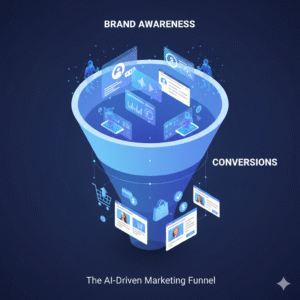
Another profound shift in SEO for 2025 is the need for a bifurcated approach. In the past, a single SEO strategy might have captured the entire marketing funnel, from awareness to purchase. But now, with AI Overviews and generative tools, the user journey has changed.
1. Top-of-Funnel Strategy
This focuses on getting your brand or product recommended within AI answers. It’s about building awareness, establishing authority, and influencing AI-generated suggestions when users are in early research stages.
2. Bottom-of-Funnel Strategy
This targets users ready to make a purchase. Your goal is to ensure they land directly on your website to complete a transaction, which requires optimizing for high-intent keywords and strong conversion UX.
This split strategy is essential for success in 2025–2026.
Generative Engine Optimization (GEO): The Game-Changer for 2025 & Beyond
If there’s one SEO trend that will dominate the next few years, it’s Generative Engine Optimization (GEO) — the art of influencing generative AI tools like Google’s AI Overviews, ChatGPT, and Perplexity.
What is Generative Engine Optimization (GEO)?
GEO focuses on getting your brand recommended by AI systems, not just ranked on search results. These tools curate and synthesize web content, so the goal is to teach the AI that your brand deserves mention.
With over a billion users expected to interact with AI Overviews by the end of 2024, early GEO adoption will be a major competitive advantage.
How to Implement GEO
Foundation: Strong Traditional SEO
Generative engines still rely on traditional ranking signals. If your site doesn’t appear in base-level web searches, AI likely won’t surface it either.
Key actions:
-
Optimize on-page SEO: titles, meta tags, structured data, headings.
-
Strengthen backlinks from authoritative domains.
-
Follow a Technical SEO Checklist 2026: fast site speed, mobile-first design, HTTPS, structured data, and clean code.
-
Target featured snippets (“position zero”) to increase AI inclusion.
Content Alignment for AI: Mirror the Answer Structure
AI responses typically start with a short answer, then elaborate.
Mimic this structure:
-
Start with a concise answer.
-
Then expand with supporting context and subtopics.
This makes your content easy for AI models to summarize and reference.
Long-Tail & Niche Topics
AI encourages longer, more specific queries. Targeting long-tail keywords and creating specialized content gives you an edge in generative search visibility.
Digital PR & Brand Mentions
AI tools reference multiple websites. To appear in answers, ensure your brand is mentioned across authoritative third-party sites.
-
Secure press features, reviews, and industry mentions.
-
Ensure consistent messaging and positioning across all mentions.
This approach goes beyond backlinks . It’s about brand presence across the digital ecosystem.

The Indispensable Role of E-E-A-T in Modern SEO Ranking Factors
AI search has made E-E-A-T (Experience, Expertise, Authoritativeness, Trust) more crucial than ever.
These signals help both Google and AI systems evaluate content credibility.
How to Demonstrate E-E-A-T
-
Author Bios: Include credentials and expertise.
-
First-Hand Experience: Use videos, photos, or real case studies.
-
Updated Content: Show “last reviewed” dates for accuracy.
-
Trust Signals: Add reviews, “as seen in” logos, research citations, and expert team profiles.
Together, these build confidence for both humans and algorithms.
Advanced SEO Strategies & Effective SEO Tips for 2026
Beyond GEO and E-E-A-T, several advanced techniques will define SEO success.
Boosting Brand Visibility Beyond Your Website
With limited link slots in AI search results, off-site visibility is key.
-
Digital PR: Conduct surveys or studies to generate media buzz.
-
Partnerships: Collaborate with reputable brands and online communities.
This expands your digital footprint and signals authority to AI systems.
The Future of SEO: What About Voice Search?
Voice search continues to grow, but remains low-value for conversions.
Most queries are informational (“What’s the weather?”), not commercial.
Still, optimizing for natural language queries supports conversational search and strengthens AI visibility.
AI-Powered SEO Tools 2025
AI tools are revolutionizing workflows in:
-
Keyword Research: Predicting trends and user intent.
-
Content Strategy: Identifying topic gaps and improving structure.
-
Competitor Analysis: Revealing backlinks and content opportunities.
These tools streamline execution so marketers can focus on strategy and creativity.
Staying Ahead: Preparing for Google Algorithm Updates
Google algorithm updates are accelerating with AI integration.
By focusing on GEO, E-E-A-T, and split-funnel SEO, your site remains resilient against volatility.
Businesses that create authentic, authoritative, and AI-friendly content will thrive in the next phase of search evolution.

Conclusion
The next year will redefine SEO.
Generative AI has transformed search from a Google-centric system into a multi-platform ecosystem requiring agility, authority, and innovation.
To succeed:
-
Master GEO
-
Embrace E-E-A-T
-
Adopt a split-funnel strategy
-
Amplify your brand visibility
Don’t wait until your competitors dominate AI-driven search.
Take the first step today
Leave a Reply